Category Archives: NASA

Sailing into Light

This week, the NanoSail-D mission successfully deployed from FASTSAT. This is, apparently, the first time a nanosatellite has ejected from a microsatellite.

(In spacecraft lingo, engineers grabbed the term “microsatellite” to just mean “a small satellite,” where “small” was in comparison to the spacecraft with masses of thousands of kilograms. But they kept the relationship between the metric prefixes. So a “microsatellite” is about 100 kg or less, and a “nanosatellite” is about 10 kg or less. This is unfortunate for, say, my research group, because our proposed millimeter- or micron- scale spacecraft would have to be named something inconvenient to say, like “yoctosatellites.” Anyway.)

I think NanoSail-D is exciting for two reasons. First, it’s only the second solar sail mission to not explode on launch, after JAXA’s ICAROS mission. (The Planetary Society tried to launch a solar sail five years ago, but the converted ICBM launch vehicle malfunctioned.) Solar sails are a propulsion system that could allow spacecraft to move around the Solar System without expending propellant, so they would be a great technology for getting from planet to planet efficiently. The downside is that solar sailing takes a long time, but fortunately, robots can have long lives and a lot of patience. More solar sails may mean more robotic missions to planets, asteroids, and moons all over the place, which is a good thing for science!

The other reason why NanoSail-D is cool is this microsatellite-deploying-a-nanosatellite idea. Microsatellites are small and low-cost enough to have a pretty rapid development cycle, and spacecraft engineers are less averse to trying out riskier, newer technologies on microsatellites. FASTSAT is a great example: it’s a technology demonstrator mission, a spacecraft devoted entirely to trying out new things. Nanosatellites can be even faster and cheaper to build, so much so that it’s pretty common for universities to build CubeSat projects and you can buy components to build a fully-functional CubeSat off the internet for $100,000 or less.

So with FASTSAT and NanoSail-D, we have a relatively cheap spacecraft with a rapid development cycle that includes cool new technologies – and it launches an even cheaper spacecraft with even riskier technologies, including one that could allow interplanetary trajectories.

These are the ingredients we need to get probes all over the Solar System, and these are the design philosophies that push the envelope of spacecraft engineering.

Space Access Gap: Closed!

SpaceX’s second successful Falcon 9 launch has just inserted the Dragon capsule into Earth orbit!

First Falcon 9 launch (SpaceX)

The Dragon vehicle will perform a series of check-outs over the next few orbits before re-entering the Earth’s atmosphere. If all goes well, then this is a major success for SpaceX and NASA’s COTS program – which seeks to contract International Space Station supply missions to private companies after the Space Shuttle retires, so that ISS has more resupply mechanisms than the Russian Progress vehicle and European ATV. SpaceX wants to human-rate the capsule, as well, to provide astronaut transportation to orbit and even space tourism!

Today's launch (NASA)

Again, if all goes well, this mission ought to be vindication for President Obama’s vision for NASA: use commercial providers to get into Earth orbit, and then let NASA focus on the real envelope-pushing exploration. If the Falcon 9 gets to orbit, and the Dragon could take cargo or people up, then why don’t we just buy those for a fraction of the cost of the Ares 1/Orion system? Especially since that system would take many more years of development to become available to NASA. The Falcon 9 and Dragon will be ready much, much sooner!

Best of luck to the SpaceX team. And may the Congresspeople holding NASA’s purse-strings get their heads out of their pork barrels.

Update 1600 8 Dec 10: At the post-flight press conference, Elon Musk and Gwynne Shotwell of SpaceX gave an overview of the mission and a rosy assessment of its success. Apparently, the Falcon 9 second stage reached a very health apogee – well above the ISS orbit – the Dragon performed well enough in space to maintain a good lock on the TDRSS relay satellite, and it successfully splashed down within 10 km of its target and within a minute of its projected landing time. Musk stated a couple times that his “mind was blown” and pointed out that, had there been people on the Dragon spacecraft, they would have had “a very nice ride.” He thinks that all (“all”) Dragon needs to be human-rated are seats and an escape system, though he did admit that launch-escape system testing is both crucial and very hard. Apparently NASA officials told SpaceX that, if this flight went well, they would consider allowing an ISS rendezvous and docking on the next Dragon flight, so that may be a possibility for next year. Another Musk gem, on the politics of SpaceX’s activities: “any politician who wants to increase the deficit and reduce American access to space, go ahead and cut [the NASA Commercial Crew program].”

Did NASA Discover Life in the Saturnian System?

Um, no.

NASA put out this press release, which inspired a blogger to post some speculation based on the credentials of the participants in the press conference:

if I had to guess at what NASA is going to reveal on Thursday, I’d say that they’ve discovered arsenic on Titan and maybe even detected chemical evidence of bacteria utilizing it for photosynthesis

–and the Internet went wild with the announcement that NASA had found life on one of Saturn’s moons, including an Atlanta newspaper. Of course, nowhere in NASA’s press release did they say anything about Saturn or Saturn’s moons, but feh! Who cares about what the primary sources say. Speculation is fact!

My guess? There has been some kind of study or experiment that shows how life could evolve based on a different chemistry than familiar Earth life, and that that chemical environment may exist (or have existed) elsewhere in the Solar System. The point of such a finding would be that we’d have to make sure any future astrobiology studies don’t just look for life as we know it – that they include the new chemistries. But that’s only my guess.

If NASA had discovered life, don’t you think the press release for the upcoming news conference would be front and center on NASA.gov, and that the list of panelists would include names like Bolden, Garver, Holdren, or Obama?

NASA went where I’ve gone!

This year’s NASA Desert RATS exercise is taking place near Flagstaff, AZ. Here’s the view from inside one of the rovers after a traverse:

RATS is a program in which NASA engineers, scientists, and astronauts take prototype equipment into remote locations on Earth and practice the procedures and operations that they would use if they were actually on another planet. It’s an opportunity for the engineers to see what their creations are capable of, scientists to see how much work astronauts can get done and teach them basic skills like field geology, and the astronauts to get some experience using the equipment so they can provide feedback.

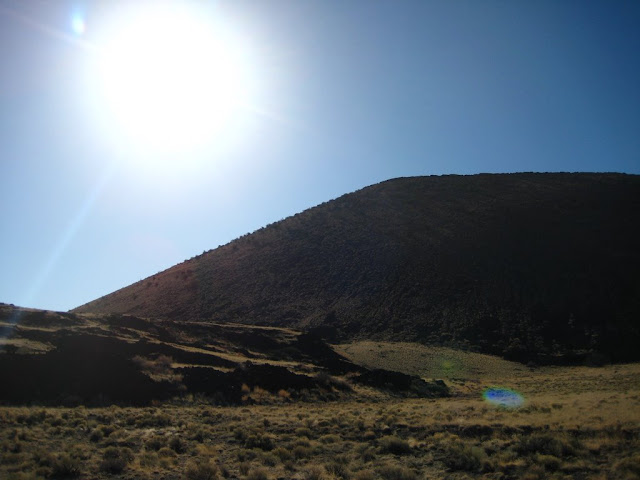
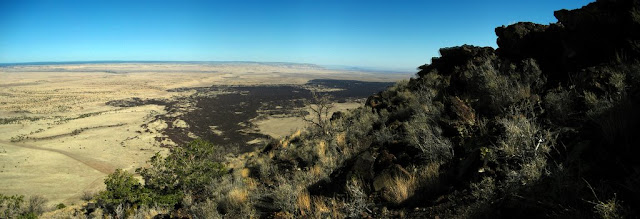
Not only is RATS showing off the best capabilities of the most successful part of the Constellation Program – the Lunar Electric Rover Concept, or LERC – but they have gone to an especially cool site, a well-preserved but little-known cinder cone volcano known as SP Mountain! As that video played, I kept thinking to myself: “that looks familiar…” Here’s my view of SP and the lava flow coming out of the base of the mountain:

SP Cone
SP flow

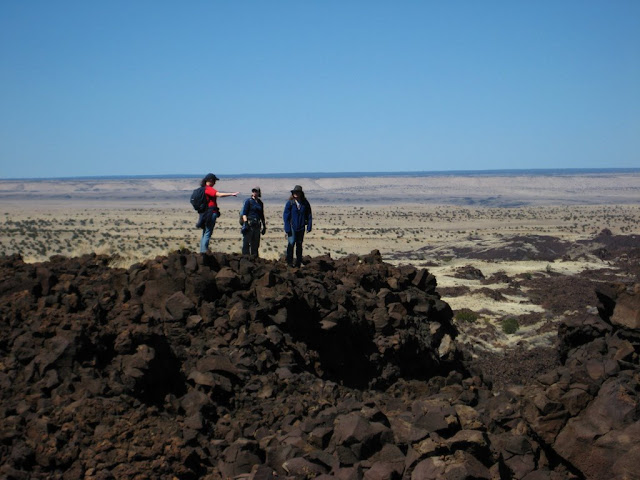
When I was there, with a class of planetary geology grad students led by Cornell Mars scientist Jim Bell, I couldn’t help but picture the rugged a’a terrain of SP flow with astronauts picking their way along. What a tremendous place to practice exploration operations!

Grad students exploring the flow

Risk

So, there’s been another explosion on an oil rig in the Gulf of Mexico. This got me thinking about risk and risk management.

In the engineering sense, “risk” refers to the chance that a particular system will fail and how heavily we weight the consequences of such failures. Risk is present in any design, any system, any process. There’s no way anyone can drive risk to zero, because nobody has perfect knowledge of any system and nobody can predict the future with 100% accuracy. The question is how unlikely and how inconsequential a failure must be to represent an acceptable risk. A complimentary question is how well we plan to deal with those failures when they happen.

BP undoubtedly performed some sort of risk analysis on the Deepwater Horizon platform before it began operations. Engineers must have, at some level, looked at the drilling hardware and procedures and decided that the chance of a catastrophic failure was such-and-such percent. They must also have looked at the cost of dealing with those failures, and come up with so many billion dollars. But all this gets weighed against the potential benefits: if the Deepwater Horizon platform brought in revenue of only a thousand bucks a year, but had an chance of failure of 50%, and the cost to the company of that failure is $20 billion, then BP probably would not have set up the platform the way they did. But if the calculation came out with a one-in-a-million chance of failure, a $20 cost of failure, but revenue of $50 billion per year, then of course they’d go ahead with the project.

The failure of the actual Deepwater Horizon system could mean any one of several things. It could mean that all BP’s risk estimates were correct, and they just got supremely unlucky with that one-in-a-million chance: unlikely, but possible. It could also mean that their analysts made some error: they may have put the chance of failure too low, or the consequence of failure too low, or the potential benefit of success too high. The real trouble with this sort of thinking is that we can’t know for sure where the analysis went wrong, if it did.

However, when we look at BP’s horrendous safety record, the facts that came out about how blasé other oil companies were about drilling, safety, and cleanup in the Gulf, and this second explosion on a platform owned by another company with a dubious safety record (at least, so I heard on NPR), I tend to think there was a problem with the risk analysis. These companies are engaging in higher-risk behaviors in order to get higher payouts. In short: they are getting too greedy. This might not be a problem in some industries, but here, the cost of failure isn’t just borne by the risk-taking companies, but also by the residents of Gulf Coast states (along with the rest of us taxpayers). I hope that these incidents cause the companies in question to revise their risk analyses to be more conservative, especially now that there is wider recognition in our society of the costs of such risky behavior to the wider economy, environment, and climate.

Now, there are good reasons to pursue more high-risk activities, if the potential benefit is high. For instance, there’s my favorite kind of engineering: spacecraft engineering! I would love for NASA to take much greater risks than it currently does!

Current NASA policy, for instance, dictates that any mission should present zero risk to the safety of astronauts on board the Space Station. This policy, which appeared after the Shuttle Columbia broke up on reentry, makes little sense. Remember what I said before about zero risk? It does not and cannot exist. Yet, that’s NASA policy – and the policy has caused NASA to nix some pretty exciting missions for posing, for example, a one in 108 chance of collision with ISS. The chance of Station astronauts getting fried by solar flare radiation or baking when ISS refrigeration units fail or losing their air from a micrometeoroid are likely to be much higher than 1 in 100 million – so what’s the problem? These missions don’t add any danger compared to the dangers that already exist.

Besides, we’re taking about spaceflight. It’s not safe. I mean, we’ve made it pretty safe, but still – it involves strapping people on top of tons of high explosives, pushing them through the atmosphere at hypersonic speeds, jolting them around repeatedly as rocket stages separate and fire, and then keeping them alive in a vacuum for days, weeks, or months at a time. Honestly, it’s astonishing that we managed to pull off six Moon landings with only a single failed attempt – and a nonfatal one at that!

I would argue that those tremendous successes in the early space program came from high-risk activities. For the first American manned flight into orbit, NASA put John Glenn on top of a rocket that exploded on three out of its five previous launches. The Gemini Program pioneered the technologies and techniques necessary for a lunar landing (and that we now take for granted in Space Shuttle activities) by trying them out in space to see what happened – that program nearly cost Neil Armstrong and David Scott their lives on Gemini 8. The Apollo 8 mission, which was supposed to orbit the Earth, was upgraded to a lunar swingby – the first time humans visited another planetary body – mere months before launch. But these days, to hear NASA brass and Congressional committee members tell it, no such risks are acceptable. NASA must use “proven technologies.” NASA must accept no more than bruises on its astronauts when they return from missions. NASA must not chance any money, material, or manpower on a mission that might not succeed, even if such success could give us the next great leap forward. And so we end up with manned “exploration” of only low Earth orbit for thirty years, an Apollo reimagining to succeed the Space Shuttle, and, if the House has its way with President Obama’s proposed NASA budget, a space program dedicated to building The Same Big Dumb Rockets That It Already Built for the forseeable future.

Fortunately, we still get to see some envelope-pushing on the robotic exploration side of things. Missions to Mars have only recently broken through to a cumulative success rate greater than 50%, thanks to a string of high-profile successes, and that’s partly because of the ambition involved in landing something on another planet. It’s wonderful to see the progression from the Sojourner to Spirit and Opportunity to Curiosity rovers – but remember that the Beagle rover, Mars Polar Lander, and Mars Climate Orbiter all crashed into the Red Planet. These failures cost money and effort, and perhaps a direction of research in a few academic careers, but not lives, which makes them more acceptable to bear back on Earth. Even if the risk is high, the cost of failures is acceptable compared to the benefits.

Still, there could be more room for audacity (is audacity = 1/risk?) in robotic space exploration. Take the MER mission, for example: a pair of vehicles designed to last for 90 days have been operating for over six years – and counting. In one sense, this is a great success. But in another, it shows that spacecraft engineers are far, far too conservative in their designs. Imagine if they had actually designed the MER rovers to run for 90 days: everyone would have been happy with the mission, and the rovers would have cost less and taken less development time to the tune of something like the ratio between ~2200 and 90 sols. Or, conversely, consider if NASA had been ambitious enough to design a five-year rover mission from the start. That might have seemed laughable when the MERs were launched, but now we know that duration to be well within our capabilities. Because, in fact, we design space missions that rarely stretch those capabilities, since we do not tolerate risk.

This risk aversion in spacecraft engineering is one reason why I (and so many other people) are excited to see companies like SpaceX and Scaled Composites – which aim to turn a profit, something NASA doesn’t have to do! – doing the things they are doing. SpaceX, especially, which had to launch its Falcon 1 rocket several times before it succeeded, but used that experience to pull off a big Falcon 9 launch and secure the largest commercial launch contract ever. It’s also one of the reasons I was so excited about President Obama’s plan for NASA: it looked like NASA would be sticking its neck out for unproven technologies again.

How is it that we as a society tolerate tremendous risk when it comes to activities that affect thousands or even millions of lives on Earth, but we balk at the slightest chance of failure when considering space travel? It’s a puzzle to me.

NASA, High Technology, and Me

You know why I’m most excited about President Obama’s proposed budget for NASA? High-powered technology research programs. Hey, our space program really ought to be synonymous with high tech!

At an industry forum today hosted by NASA’s Office of the Chief Technologist, several new research programs, open challenges, and collaborative initiatives got rolled out – and my research group’s projects were, literally, a poster child for NASA!

In this presentation on small spacecraft technologies, you can see a picture of Cornell’s CUSat spacecraft on page 5…concept pictures and graphs that I developed for my flux-pinned spacecraft project on pages 7 and 15…a picture of me in front of the Zero-G aircraft in page 15, along with a picture of my labmates with our equipment in microgravity…and the citation slide lists this post on my blog.

I’m thrilled – as a guy who’s passionate about space exploration and passionate about combining weird physics and radical engineering to make sci-fi technologies into reality, I’m really psyched to see innovative programs like NIAC come back from their funding graves and a new NASA focus on enabling technologies that will help make our space exploration dreams into exciting realities.

Time for space enthusiasts to lobby hard for the new budget on Capitol Hill!

A fleet to realize the new vision

I think that President Obama’s vision for NASA holds a great deal of promise. However, I seem to be in the minority – with people from Senators with NASA-associated districts to Stephen Colbert to Jesus Diaz on Gizmodo talking about the “end” of the human space program. I often wonder why they don’t see what I see. Obama has both increased the NASA budget and explicitly stated that he wants more astronauts flying in the coming decade than ever before, so he clearly is not trying to “cancel the human spaceflight program.” Given that, it seems straightforward to me that the NASA centers will still need to train astronauts, build vehicles, and conduct mission operations; NASA vehicles will still push the boundaries of capability, and NASA astronauts will explore the Solar System beyond Earth space. The only difference is just that astronauts won’t get to those new vehicles atop Ares launchers, but rather perched on something like the Falcon 9 – which is much, much closer to operation – and our targets are more ambitious. So why the enormous gap in opinion among space exploration proponents? And what might NASA administrator Charlie Bolden do to consolidate support?

I think the problem is that, without a NASA launch vehicle, critics have a hard time envisioning how the new generation of NASA astronauts will get around and what they will do. There won’t be any dramatic Space Shuttle or Saturn V launches – instead, the astronauts will be…”taxiing.” And they will taxi up to…what, exactly?

President Obama wants humans to leave the Earth-Moon system by 2025, get to Mars orbit by 2030, and develop the capability to live and work in space indefinitely. Here’s where Administrator Bolden could step in. NASA systems engineers and artists could crank away and produce concept studies to suggest a new fleet of NASA crewed vehicles. By starting right in on the design of new vehicle concepts, and setting explicit deadlines for their launch and operation, the new NASA vision could become more clear and exciting. The public will start to see what I see – a NASA program that develops dedicated space exploration vehicles, which carry astronauts for months at a time on journeys to deep space, asteroids, and other planets. Clearly, that is no end of the human spaceflight program. It’s the next step.

Below the break, I’ll outline such a possible concept vehicle fleet.

Continue reading A fleet to realize the new vision

Space Shuttle Atlantis has landed safely

Launch of STS-132
Launch of STS-132

Space Shuttle Atlantis touched down at 8:48.11 Eastern time at Kennedy Space Center. This makes Atlantis our first Space Shuttle to retire. (I think that also makes it the second reusable space vehicle to retire, after SpaceShipOne decommissioned in 2004.)

This is a sad day in space exploration…but it is long overdue. In what other modern industry or field of endeavor other than space exploration do we continue to use 30-year-old vehicles and devices, and in what other field do we consider those vehicles to be “cutting-edge?” This is the beginning of a period of transition, and I can’t wait to see us get started on what’s next. That day, also, is long overdue.

Congratulations to Atlantis and its many crews on the successful completion of all its missions.

Go Falcon 9!

First: Go Atlantis!!!

Now, on to the purported topic of this post: The SpaceX Falcon 9 is slated to launch in less than a week!

Beautiful photo of Falcon 9 on the pad (SpaceX)

Ever since the FY11 NASA budget came out, I’ve been anxious to see the success of the Falcon 9, SpaceX’s heavy-lift vehicle, and the Dragon capsule. A good Falcon launch and successful Dragon flight demo would be like jumping NASA’s Constellation program straight to an Ares I/Orion system prototype. This is the rocket and capsule that the new budget banks on for ISS resupply and astronaut transport. Of course, SpaceX had already won the ISS resupply contract before the new NASA budget came out, so this really isn’t that big a change from the status-quo solution to the space access gap – except that a successful man-rated Dragon would close that gap entirely!

For the bajillionth time, Mike Griffin’s Constellation Program was on track to do what we did 40 years ago, with what we used 30 years ago, 20 years from now. I know the program says “by 2020,” but it ain’t gonna happen, even with billions of extra dollars.

The new budget focuses NASA on in-space vehicles. Vehicles for carrying people throughout the Solar System. Vehicles for building colonies in space. Vehicles for taking people to planets. Vehicles for exploring planets. The kinds of vehicles that cannot be built on Earth and launched, whole, on a Saturn or Ares rocket. The kinds of vehicles that nobody but NASA would try to build. The kinds of vehicles that would move the human spaceflight program forward!

But, in exchange, NASA is not going to develop boosters. The space agency is going to send its astronauts – still NASA astronauts, dammit! – up to LEO on board  vehicles bought from commercial providers. The outcry against this concept is based primarily on the objection that the commercial space access providers are “unproven.”

Well, phenomenal success of the Delta and Atlas lines aside, this is the proving ground. There’s a lot riding on the Falcon 9 flight test; the space community consensus could go dramatically one way or the other depending on the outcome. If SpaceX makes it, we can almost consider NASA fast-forwarded to what Constellation would have done in 2015, or later. (And we’ll be much closer to buying tickets to space!) They just have to buy their launchers from SpaceX, instead of….contracting to ATK to build them.

Good luck to the SpaceX launch crews! Hope the launch is spectacular!