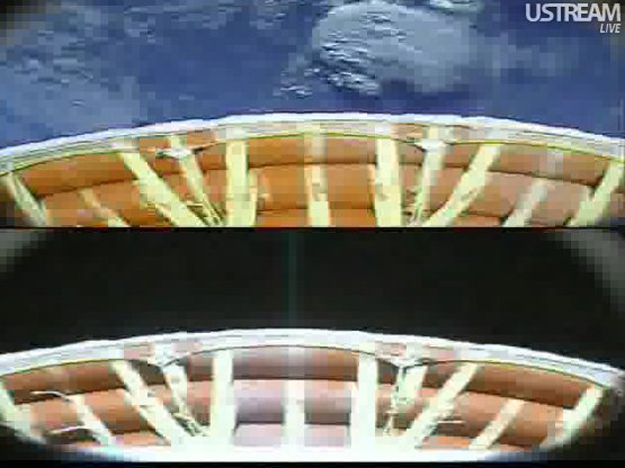
In the wee hours of last Monday (Eastern US time), a jubilant Mission Control erupted at the successful landing of the Mars Science Laboratory “Curiosity.”
Curiosity has demonstrated some amazing technological feats. Now, that portion of its mission is nearly over, and the rover will go over to science operations. The hair-raising, fist-pumping, frenzy-whipping part is done – but it’s been great practice!
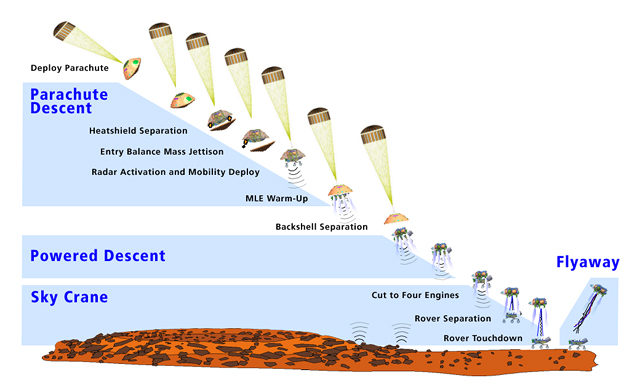
While the MSL entry, descent, and landing system may seem harebrained and silly, it is in fact quite conservative and driven by fundamental engineering decisions. The engineering triumph of this system demonstrates to me how spacecraft engineers can set extraordinarily technically ambitious goals and achieve them in dramatic fashion. The JPL engineers who devised it are the types of people who design a device to last for three months and find it still happily ticking away six or eight or more years later. This thing was going to work. The toughest part was probably selling the concept to the NASA brass!
So, now we’ve got reinforcing knowledge that we can aim for the stars and hit them (well, planets, anyway). Let’s set out with some crazy-ambitious goals! And let’s set out for some places that let us answer fundamental questions.
This is my core disagreement with the NASA Decadal Survey, which prioritizes a Martian sample return mission above all else: such a sample return will advance the sub-sub-field of Martian geochemistry an incremental amount. This is not an ambitious enough goal to meet our demonstrated engineering capability! I don’t want to discover evidence that some place may have been habitable sometime in the distant past – I want to go someplace where we discover life because it’s staring right back at us.
Not so long ago, I proposed a mission concept for a subsurface probe to Jupiter’s ice moon Europa. Europa is intriguing because we already know that it has liquid water, and we already know that it has a strong energy source from Jovian tides – both of which are key ingredients for life as we know it! Even better, there are certain surface features on Europa, which – if our best models for how those features form are correct – are conduits from outer space to the ocean beneath. I suggested that we might develop a space vehicle that conducts a high-wire act above one of these exposed ice fractures, dropping probes down into the ocean below.