
I’ve seen “The Last Jedi” a couple times now. And I liked it very much! Here there be spoilers. Continue reading “The Last Jedi” is Exactly My Star Wars
Category Archives: Science Fiction
Gliese 581g (Hámnù, Pedak, Gaustan, or Estivama)
I finished a big new map! You can purchase a print here.
The world known to humankind as Zarmina (catalog identifier Gliese 581g) is a habitable planet orbiting a red dwarf star. It is tidally locked to its dim sun, such that one face of the planet always points toward the sun. The most striking consequence of this orbit geometry is that the habitable region of the planet is a disk-shaped area roughly the size of an earthly continent. The center of this zone always sees a sun at high noon, while toward the edge of the disk, the sun sinks gradually away from zenith. Outside this region, Zarmina is encased in ice. As the sun does not define east and west, the cardinal direction convention on Zarmina refers to the planet’s orbit, instead: prograde (in the direction of the orbit), retrograde, normal (up from the orbit), and antinormal.
Zarmina does not exhibit evidence of plate tectonics. Surface features express several processes: large-scale rift graben form from tidal stresses, shield volcanoes build over mantle hotspots, impact craters and basins dot the planet, and erosion slowly whittles down the more ancient features.
The world hosts life with biodiversity similar to the Earth. One dominant intelligent species has settled across the landmass, with cultures reaching technological development levels roughly equivalent to 1300-1600 CE on Earth. There are three regions with large populations, indicated on the map in normal-retrograde (NR), antinormal-prograde (AP), and normal-prograde (NP) callouts. In the four major language families of Zarmina, the natives call their world Hámnù, Pedak, Gaustan, or Estivama.
The NR region hosts two major linguistic and cultural families. The first is an empire ruled from the city of Hòmp Sīnkà (Port Sinka). Explorers and artisans populate this empire; though the political extent of the empire only reaches as far as Níngtòhús (Greencliff), speakers of the imperial language can be found all along the coast in the prograde direction as well as in coastal settlements on the other side of Fíkùm Pòst (The Normal-Direction Sea). The antinormal borders of the empire are more ragged and contentious, however – the imperial urge to spread its vision of culture and knowledge brings it into direct conflict with the city-states in that area. The people of Kivod Sev Adoso (Mountain Gate Town) dominate the substantial resources of Sev Skem (Mountain Channel) and have repelled several campaigns launched from Hútpòkā (Chasmtop). Hòmp Sīnkà rapidly loses its stomach for these campaigns, and so Kivod Sev Adoso holds back imperial expansion. A more fluid and contentious collision of cultures occurs in Pasken Gimet (Pasken Forest). Scattered settlements under the command of local chiefs raid imperial populations farming antinormal of Ngùsì Āmā (Wide River) while imperial reprisals prevent the Pasken peoples from incorporating large towns. The disparate kindgoms of Ogjapud (Grayrock), Katofa Petang (Retrograde City), and Fetva Zand (Calm Peninsula) maintain their own set of animosities and alliances.
The plains of the AP region offer little shelter from the winds that blow in off the ocean. As the land rises, larger and larger plants cover the land until one encounters lush prairies between dendritic river networks. Roaming clans live on the prairie “kidan.” A few large settlements dot the kidan, most notably Jung a Uid Nakaun (the City of Two Rivers). The kida clans take pride in not pinning themselves to a particular place – many of their dwellings are portable, and they happily move their crops to new locations on the fertile plains when they tire of the old. The culture is leery of townfolk. The Ushtin clan is a splinter from the kida clans, and is more attached to their resource-rich homeland on the shore of Gaiju a Shai (Lake of Wind). On the other end of the cultural spectrum, the dramatically different Togui a Awaish (Chasm of the Forest) hosts a sect worshipping the sun god Dautwai. This sect possesses the settlements of Santiso (roughly, Above-the-Green) and Uigonja (named for the uigon trees), as well as a major urban center in Jung Togunau. From the isthmus of the Nakau Dautwai, dramatic views of the Audos a No (Mountain of the Sun) have inspired monuments throughout the city. The natural defenses of Togui a Awaish shield the people within from raiding kida clansmen.
Lush lands and geographic barriers squeezed into a comparatively smaller area give rise to the warring city-states of the NP region. Though they share a common linguistic root, each of the population centers here represent separate nations. The largest are Evinbok and Neka Estag, both named for their original monarchs. Evinbok holds a position of strategic strength, with access to productive outlying farmland in Pantma Zhusti (the Upper Plains), while timber and easily quarried rock are in the ancient impact basin of Gesta Kazi (Broken Bowl). Kagzai (roughly, Blue-ton) and Ka Topi (Lower Town) are notable for practicing a form of representative democracy. Ka Shata Besi (High Cliff Town) is the center of a prosperous small nation of traders, who build ships from the timber of Tifa ko Pantma Shti (Forest of the Red Plain) and sail through Vimna Shti (Red Pass) as far antinormal as Sot Ushtin.
This map is hand-drawn with Pigma Micron pens of various types, then colored in Derwent watercolor pencils. I finish the map by painting over the pencils to blend and soften the watercolors together. The last step is photographing the piece with a 60 mm macro lens. The entire thing is 17″ wide and 14″ tall.
Enjoy, everybody!
What drives me nuts about “The Martian”
“The Martian:” Yeah, Martian dust storms are nothing. Yeah, Rich Purnell could’ve explained his maneuver to the NASA top brass with about six acronyms and the phrase “gravity assist.” Yeah, real-life-JPL has almost nothing to do with human space exploration. And yeah, that blow-up-the-Hermes thing is a completely harebrained and terrible idea.
I’ll give the movie a pass on all those counts, because it’s a good story, it gets most things right, and it puts technical problem-solving front and center. But here’s what really drives me nuts about “The Martian:”
“The Martian” highlights what NASA must do, but is not doing, in order to get people to Mars.

NASA must build interplanetary transfer craft optimized for deep-space travel, like the Hermes, not single-use capsules designed mostly for reentering Earth’s atmosphere like Orion.
NASA must invest significant research and development effort into “in-situ resource utilization,” such as the robotic manufacture of the fuels and propellants the MAV uses for Mars ascent.
NASA must develop closed-loop life support systems, like Mark Watney has in the water reclaimer and the oxygenator.
NASA must learn to grow food on Mars, instead of trying to send every supply with their astronauts in a single mission.
NASA must build vehicles that provide their crew with artificial gravity, by rotating, to counteract the bone loss effects of long-duration spaceflight.
NASA must learn to let its astronauts solve their own problems when they are twenty light-minutes away from Mission Control.
Most of all, NASA must try a lot of ideas, and they must be willing to see some of those ideas fail, in order to accomplish their ultimate goals.

Right now, NASA’s plans for getting people to Mars revolve around a series of activities designed to “learn how to live and work in space.” These activities include astronaut Scott Kelly’s hashtag-YearInSpace mission and the Asteroid Redirect Mission.
Commander Kelly’s mission has the goal of learning how the human body responds to a long duration spaceflight. At the end of his mission, Kelly will be tied for the fifth-longest duration spaceflight. We already have much experience with long spaceflights. Our friends in Russia have even more. So we already know pretty much everything that’s going to happen to him. What’s more, we know ways to mitigate those adverse effects. We need, for example, something to simulate gravity. Like a spacecraft with a centrifuge. That’s a solution science fiction – including “The Martian” – has taken for granted for decades, though NASA has no obvious plans to build true long-duration space vehicles for its crews. They will go to Mars floating in the cramped zero-g environs of an Orion capsule.
NASA also isn’t looking seriously at growing food to keep their crews fed in space. At a conference last March, I learned that all the Mars exploration reference missions involve taking all the food the crew needs for their entire travel, exploration, and return mission. That takes a huge amount of payload mass. Mark Watney did a much better job – and saved a lot of weight – by turning a few potatoes into food for a year. He got fresh vegetables, something his colleagues on the Hermes didn’t even have. Rover data shows that plants could grow on Mars, and creating a spacefaring civilization obviously depends on our ability to feed astronauts – so, again, why not look at the obvious solutions?
The big idea that “The Martian” demonstrates is human ingenuity and problem-solving. To NASA, though, that’s a problem. NASA doesn’t want astronauts tearing components apart and putting them back together like Mark Watney does. They want to have astronauts follow a checklist that has been tested, verified, and validated on the ground in several dozen ways. That philosophy is so pervasive in NASA that agency officials talk about how they need the Asteroid Redirect Mission to “test” solar-electric propulsion – a technology that NASA itself has been using in flight missions since 1998. If NASA really wants to go to Mars, it’s going to have to learn to be more like “The Martian:” being willing to take risks, try new ideas, and give its astronauts leeway to make decisions.
That’s what drives me nuts about “The Martian.” It depicts the space program that I’ve been hungering for for thirty years…and I’m afraid I won’t see such a thing for thirty more, at least.
Spaceships of the Expanse
I have been enjoying “The Expanse” series by James Corey. It’s a space opera set a couple hundred years from now, after humans have colonized and populated the moon, Mars, the asteroid belt, and outer planet moons. Spaceships journey between these worlds, complex engineering projects remake asteroids into habitable stations, and space navies boost from place to place to fight space pirates. I think it’s great because it captures what I wish for humanity’s future: that we will go out and colonize other worlds, that we will be able to undertake engineering projects for the greater good, and that we will become robust enough to weather grand challenges – things we see in the world today as global warming, income inequality, nuclear proliferation, and the like. In many ways, the first three books are about the tension between such grand visions and idealism, and politics and profiteering.
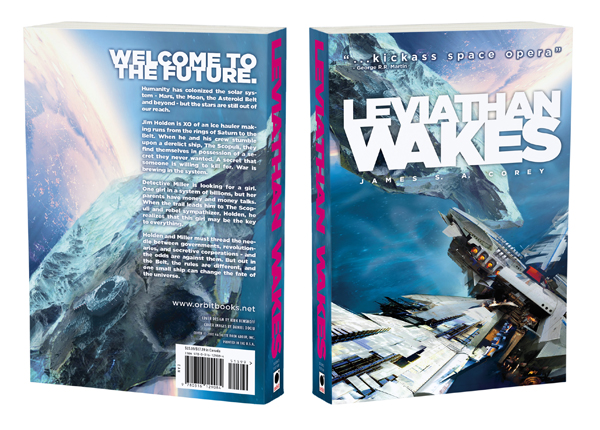
The books are soon going to be a TV series, and I am very much looking forward to see its depiction of space and space travel. (With the exception of parts of the first book, wherein Corey tried to write something horror-ish by being as gross as he could think to be. Whatever. Those are not the good parts of the book.) Corey steered clear of many sci-fi tropes that would have a big impact on the appearance of the series – no artificial gravity here! – and he made sure to build aspects of spacecraft engineering and operations into the cultures he depicted. For example, “Belters” nod and shrug with whole-arm gestures, so that they can be seen when wearing a suit. A good chunk of the books take place in zero gravity. Hopefully that will translate to the screen!
I’m going to take a look at some of the spacecraft engineering concepts in “The Expanse.” Let’s start with the most science-fictional, and therefore least plausible:
The Epstein Drive
Corey very quickly establishes that the powerhouse of his whole solar-system-wide civilization is the “Epstein Drive,” which is some kind of fusion engine for boosting spaceships around. It allows craft to thrust continuously from one planet or asteroid to another, accelerating constantly for half the trip and then decelerating constantly for the second half. This trajectory allows relatively quick travel times between worlds. Conveniently for crew health, and for TV production, the engine also provides “thrust gravity” inside the spaceship. Ships are therefore designed with decks in “stacks” above the engine with a ladder or lift giving crew access between decks, like in a skyscraper.
A fusion engine isn’t a crazy idea, especially not for a civilization a couple hundred years in the future. The problem is propellant. No matter how powerful or efficient your engine is, you will always need to be chucking propellant out the back to sustain this kind of thrust profile.
Picture this: you’re sitting in the middle of a frozen pond. The ice is perfectly frictionless, so you can’t walk or crawl or anything to get back to solid ground. What you do have is a bag full of baseballs. If you throw a baseball away from you, then you have given it some amount of momentum (mass times velocity). Your body gets an equal and opposite amount of momentum: you start sliding in the direction opposite your throw, but much more slowly than the baseball (because its mass is small while yours is big). Great! You have a way to get to shore. But you don’t want to wait out this long slide, so you throw another baseball. This speeds you up a little. Another throw speeds you up a little more. You can keep throwing baseballs until you decide that you’re going fast enough that you can wait it out. That’s basically how spacecraft work now: they thrust for a little, and then coast for a long period of time until they get to their next destination. But what if you wanted to keep thrusting the whole time? You will need more baseballs. Lots more baseballs. You are going to have to keep throwing them, constantly, to keep accelerating yourself.
Writing that a spaceship has a fusion drive instead of a chemical rocket is like replacing yourself in this analogy with a major league baseball pitcher. They will put more momentum into each pitch, and so they’ll go faster across the ice. In other words, their thrust is more efficient. But they will still run out of baseballs at some point, and then they must coast without thrust. The spaceship must stop its burn, cease thrust gravity, and wait several more months before getting to their destination. In the end, high thrust – and, with it, appreciable thrust gravity – should only be active for a short time in any space voyage through the Expanse. As we are learning with ion propulsion nowadays, it can often be most efficient to run at a low level of thrust, but sustain that for a very long time. But that doesn’t give our characters a convenient floor to stand on! So Corey put the word “Epstein” in front of “fusion drive.” “Epstein,” in this case, is short for “magic.” It’s a kind of magic that lets Corey have thrust without propellant, so that he can simultaneously achieve short (astronomically speaking) travel times and keep his crew in thrust gravity.
For a more physically realistic depiction of relationship between fuel, propellant, and thrust, consider Neal Stevenson’s spaceship Ymir in Seveneves.
The Way Ships Move
In the Expanse universe, spaceships are flipping around all the time to vector their engines in the correct direction to change their velocity. And we often read references to what the thrusters are doing on ships. This is all good. But the ships don’t really move the way real spacecraft move.
First of all, orbits barely enter the picture. One scene in Leviathan Wakes involves a character plotting out the likely trajectories of a certain ship, but other than that, the characters can go just about anywhere they want to go as long as they have a good ship to call theirs. Absent the Epstein “magic,” that behavior isn’t really plausible.
Second, though, is that Corey imagines his spaceships rotate themselves around in the same way just about all science fiction authors do: with thrusters. That’s not what most modern spacecraft do! They actually use wheels. Spin a wheel clockwise, and Newton’s third law kicks in: there’s an equal and opposite reaction. The spacecraft spins counterclockwise. Devices that function as I just described are, therefore, called reaction wheels. Other wheel-based devices that take advantage of gyroscopic torques can give satellites quite a lot of agility – without using any propellant. I suspect that the reason why these realistic actuators don’t often appear in science fiction is that there are no obvious cues to their operation: no thruster spurts, no blue glows shining out of emitters, nothing. The ship just starts to rotate.
I was happy to read that Corey’s spaceships are all native to space. There are not many cases where a ship lands, and in those cases, it’s always a small one. The heroes’ ship does once, on Ganymede. With surface gravity comparable to Earth’s moon, that’s not such a stretch for a fusion-drive starship.
28 June 15 Edit: Darn it, I just started Cibola Burn and about the fourth thing that happens is that the Rocinante lands on an Earth-size planet and immediately takes off again. Minus points for that!
The Battles
Space combat plays a big role in the plot of the Expanse books. And it’s a generally great depiction of space combat! Lots of the tactics and technologies are grounded in plausible physics. Ships shoot missiles and guns at each other, the effective range of a torpedo is determined by how close your ship needs to be to make sure the enemy ship doesn’t have time to shoot your torpedo down, the crew all gets into space suits at the beginning of the battle, there’s a ton of electronic warfare activity, and the battles wax and wane in intensity as the spaceships maneuver and orbit.
I’ve long thought that the most effective weapons in a space battle would be simple kinetic slugs or flak shells. My reasoning is simple: the speeds of objects in space are fast enough that a relatively small piece of junk can easily blast a hole through sensitive components. This is exactly why present-day spacecraft engineers – like me – worry about micrometeoroid strikes, space debris, and the Kessler syndrome. In the Expanse, the ships all fire torpedoes or guns at each other. And the results of weapon strikes are devastating: it only takes one torpedo or a few well-placed railgun slugs to take out a ship. Ships blast electronic garble at each other to screw up their targeting systems, but in the end the best defense is not getting hit – so we see the pilot do a lot of evasive maneuvering. I think this is all on the right track from a physics standpoint, though a real space battle with “Expanse-style” ships would probably take a lot longer, involve more orbit dynamics, and require a lot more computerized coordination.
There are two rather implausible elements to the battles. First is the Epstein Drive, which makes the combatants’ maneuvering matter a lot more than orbit dynamics. Second is the “juice,” a drug cocktail that keeps people alive and functioning when exposed to high gee forces. As a way to deal with high gees, the “juice” is just about as good a science-fictiony way to do it as any other, including immersing people in fluid as in The Forever War or inventing some kind of mythological inertial dampener. In the end, though, humans are squishy, precious cargo, and fighting full-on battles with them inside your spaceships doesn’t make a whole lot of sense.
Stealthy Spaceships
(There are some minor spoilers in this section!)
A plot point early on in the first book, Leviathan Wakes, revolves around the appearance of a stealth spaceship. This doesn’t involve any cloaking devices like in the Star Trek universe. Rather, a few spaceships avoid detection by (1) being painted black, which hides them in the visible spectrum, (2) having surfaces that absorb or scatter radar, which hides them in radio wavelengths, and (3) radiating heat out the side of the ship facing away from the enemy, which hides them in infrared. Much as it might give some people heartburn, this is all fairly plausible! The first two points are easy to imagine based on what we know about about the present-day Air Force. Though its not as familiar to the general public, the third item is actually something that comes up all the time in spacecraft design: especially if your satellite has sensitive electronics – like an infrared telescope – the design will include coolers, heaters, baffles, insulation, and radiators designed to emit heat in directions pointing both away from the precious detectors and away from the sun. Even the International Space Station has radiators that rotate to keep them pointing away from the sun most of the time. (The reason is that if the radiators face the sun, they’ll start to absorb heat into the station instead of emitting it out!) Such a “thermal management system” could be designed to, with the other stealth elements, give one side of a spacecraft the appearance of a cool, black spot indistinguishable from the rest of empty space.
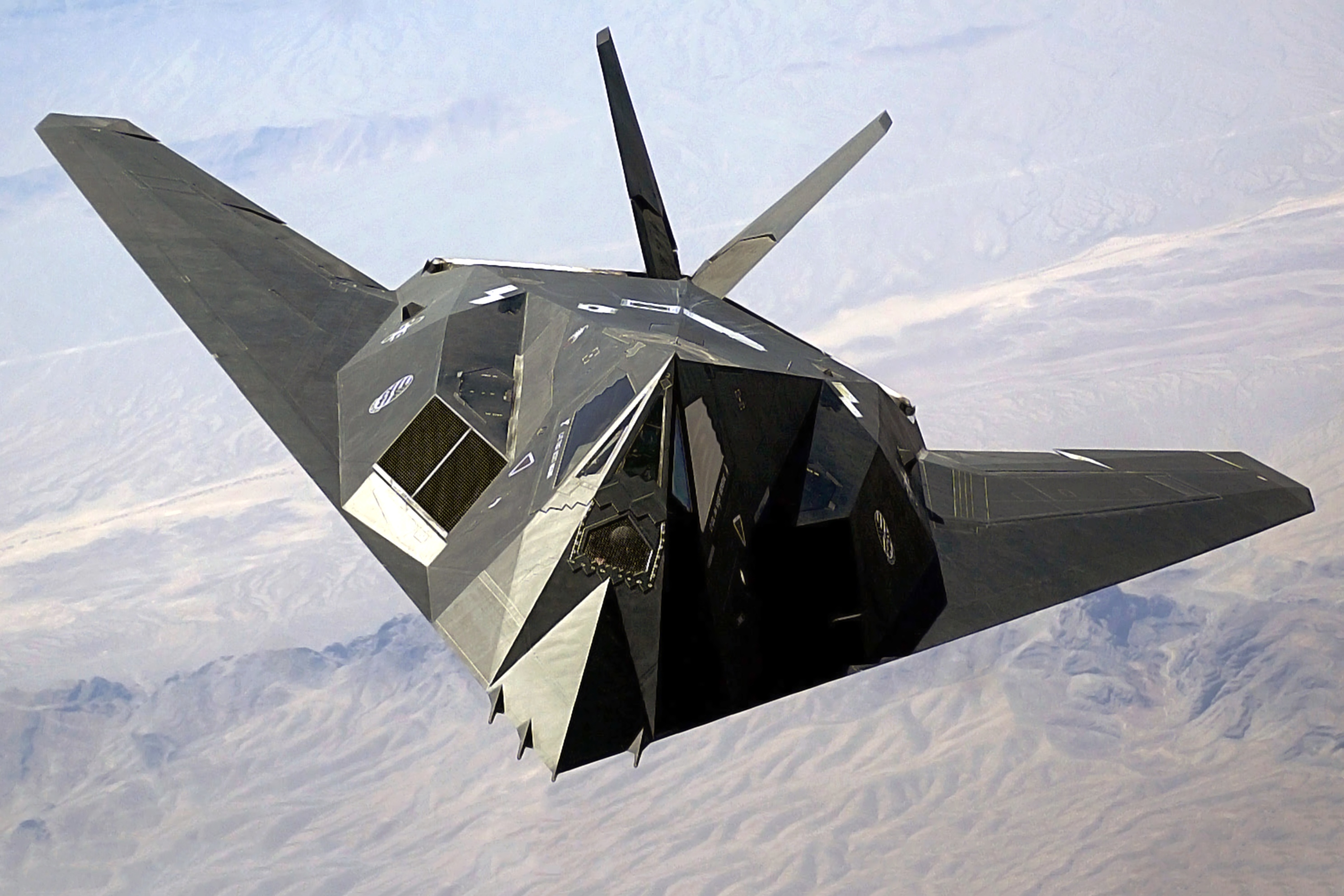
A stealth spaceship wouldn’t be easy to build, and it wouldn’t be perfectly invisible – just harder to detect than normal to a lone adversary. And, in fact, both those points are relevant to the spaceships in the Expanse. One crewmember is able to spot a stealth ship on his sensors, but he doesn’t know what it is or how to respond to it. And that’s really all it takes for the stealth ship to accomplish its mission, after all! The very difficulty of constructing a stealth spacecraft actually makes the stealthiness more effective. The characters who cannot conceive that somebody could field a stealth spaceship end up more prone to falling prey to it.
Spaceship stealth makes an appearance other times, as well. At least twice in the series, the heroes’ ship hides itself by masquerading as something it’s not.
Spin Gravity
Lots of space stations in the Expanse, including some embedded in asteroids, spin to provide their inhabitants with centrifugal “gravity.” This is an idea that’s been around the aerospace and science fiction communities for decades, and Corey executes it well. In fact, one of the things I enjoy about the books is how the plot moves between the different environments of planetary gravity, low lunar gravity, spin gravity, and (“Epstein”-based though it may be) thrust gravity. The different gravitational environments contribute to different cultures, and they put the characters in interesting and different situations. If the TV series sticks to the books, we’re going to see low-gee gunfights and damage control teams solving problems in microgravity. Regularly.
All the stations with spin gravity are large, which is the right choice. It means they don’t have to spin at a dizzying rate to get a comfortable level of gs for their inhabitants. There is another benefit, in that the weird non-intuitive kinematics of rotations – Coriolis forces – have less of an effect the larger the rotating space station. These effects can be truly weird, and it can be hard even for physicists to bookkeep all the terms correctly to model them. Something that might happen if you were standing in a spinning space station is that if you drop something, you will actually see it follow a curving path to the floor, and it won’t land at your feet. You will also see it fall at a different speed than you would expect based on the gravity you experience. (I’m planning to write something up separately to go into all the details.)
Anyway, suffice it to say that spin gravity is a strange environment and Corey, like most science fiction writers, doesn’t go into all the details. But spin is the right idea for giving gravity to spacefarers, and I can’t wait to see how the visual effects team on the Expanse interprets all the spinning structures.
All in all, I’m thinking that The Expanse will be good for science fiction on TV. It will be a show with a time period a bit closer to us than, say, Star Trek. And the show will have a wide diversity of environments to challenge the characters. I am looking forward to seeing their depictions of spacecraft and how they move around in space!
How to Get to Mars
NASA wants to go to Mars. Great!
The approach, as the agency has been publicizing with fancy graphics like the one below, seems to consist of the following:

- Send astronaut Scott Kelly to the International Space Station for one year, to learn about the effects of zero gravity.
- Perform the Asteroid Redirect Mission, moving a near-Earth asteroid into lunar orbit, to prove that solar electric propulsion works in space.
- Assemble a Mars transfer spacecraft in distant Earth orbit out of components launched on the Space Launch System.
- Pack everything astronauts need for a round trip to Mars on the new spacecraft and send them on their way!
- Keep the spacecraft in space for future trips to Mars. Bring the astronauts and supplies back and forth separately.
Not that these aren’t good brainstorming ideas, but they are not how I would get to Mars. I am too confident and impatient for this plan.
For one thing, we can probably skip this one-year mission. In fact, NASA, I can help you out by zipping straight to the conclusions: Being in zero gravity for a year results in bone loss, muscle atrophy, a compromised immune system, radiation exposure, and changes to the shape of the astronauts’ eyes. We know all that already. Similarly, we already know that solar electric propulsion works – quite effectively, robustly, and scalably – in space. Commercial satellites are flying solar electric propulsion right now, with more on the way. Heck, NASA itself has been flying solar electric propulsion, on missions like Dawn, since the turn of the millennium! Nothing needs proving here. We can take the known technology and use it.
Now, assembling a Mars transfer spacecraft, sending it onward, and reusing it for further exploration – that I like. Here is how I would do it.
First, get one of the companies developing solar-electric propulsion satellites to build a number of spacecraft buses. They will probably run a few tens of millions of dollars each, and they can ride up to space on Falcons, Arianes, or Atlases. (That’s bargain basement stuff for NASA!) Then, tie them together. All I really want are the propulsion systems. Each spacecraft has a propulsion system with something around 10 kW power, and NASA wants to get up to around 100 kW to go to Mars. So, by my rocket science calculations, we need…ten satellites. Or maybe, if we strip out all the telecommunications payloads that these satellites usually carry but I don’t care about for this application, maybe we can get the number down to five-ish.

Somebody would probably have to do some thinking about the best way to support all these stuck-together satellites. Maybe a truss of some kind. But I’m not too worried about that, because NASA has two decades of experience building modular things and sticking them to trusses in space. They can just do what they do best, using their own well-proven techniques.
Now we need a place to put our astronauts. Preferably a place that has some accommodations for solving the problems that Scott Kelly will be confirming. Many of the major physiological issues with space travel have to do with being in zero gravity. Too bad our Mars transit vehicle can’t bring gravity along with it.
Oh, wait! Science fiction knows the answer. It’s known the answer for decades! Spin the spacecraft. The astronauts get to live with a force akin to gravity, pulling them outward along the spin axis.
But building a giant ring-ship takes a lot of time, effort, energy, and resources. I have something different in mind. Something simpler:
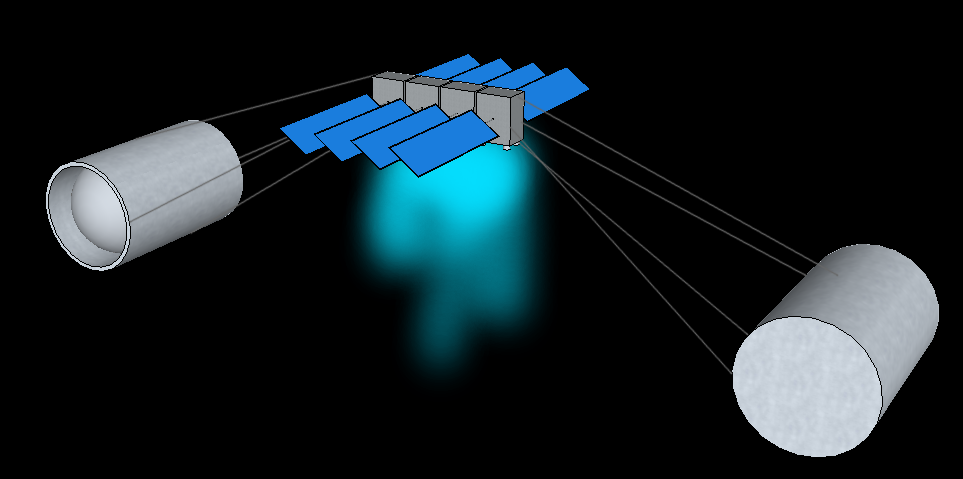
On the right, that’s supposed to be an inflatable, cylindrical habitat. (Inflatable things would be terrific for space construction, because they only need a small launcher. Since everything on my vehicle is made of small components, we can launch them once a month instead of once every two years, if they needed a super-heavy launcher like SLS.) This inflatable habitat is tied to the central propulsion core by tethers, or maybe trusses of some type. The astronauts would feel “gravity” pulling them toward the right-hand side of this image (and a little bit downward, because of the thrust). On the left is a dumb counterweight: I’ve drawn it to evoke the empty upper stage of a rocket. It could maybe be long-term storage, but its main purpose is simply to be dead weight to make the spinning easier. The whole vehicle would rotate about the thrust axis, rapidly enough to give the crew at least lunar or martian gravity levels. (The illustration isn’t to scale!)
I’d do one last thing before I send this to Mars with a crew. I’d pack the transit vehicle with enough food, water, and air to get the astronauts to Mars, and for their surface stay.
Not enough to get back, though.
Instead, I would bring seeds. When the astronauts land on Mars, the first thing they will do is become high-tech space farmers. They are going to grow all the food for their return trip on Mars’ surface.
Why would I want to do that? Well, for one thing, seeds are smaller and less massive than full-grown food products. They are probably less expensive – in an energy sense – to get to Mars than those food products would be. Then, on Mars, we can get water and carbon dioxide from the atmosphere, to fuel plant growth. So, over the whole mission, I’m actually saving time and money. There’s also a second reason, one I find more compelling. What’s the point of this whole endeavor if we don’t come out of it knowing how to colonize and explore other planets, and keep colonizing and exploring them? Learning to use the resources on other worlds is fundamental to the future of space exploration. We know Mars has water, we know it has oxygen, and we even know that we might be able to grow crops in its soil. We should focus on that idea and advance it. In other words, I think that – both pragmatically and philosophically – it would be shortsighted and silly to attempt Mars exploration using only what supplies we can bring from the Earth.
We need a space program that focuses on developing the technology to use the resources on Mars to support further Mars exploration. We need to do this in a modular, reusable, scalable manner. We need to make sure our astronauts – no, our pioneers – have the tools, the materials, the infrastructure, and the autonomy to solve their own problems. In other words, we need to stop thinking about how to put a few guys in spacesuits on Mars, and stop thinking about how to have astronauts do science on Mars, and instead think about how to colonize Mars. That requires a lot of little things to come together, with more than a few big things in the mix as well. But, for the most part, we have the technology. We’ve had it for my entire lifetime. We need a space program with the right stuff to use it.
That’s how to take a journey to Mars.
Bright sci-fi
From Battlestar Galactica to Gravity, it’s easy to think that the current generation of science fiction has to be “dark” in order to be good. But we shouldn’t confuse ourselves! Just because there are so many dark and good pieces of sci-fi out there doesn’t mean that darkness makes the sci-fi good.

In fact, I think it’s important to remember that science fiction, at its roots, is the most inherently optimistic genre of fiction! Sure, says science fiction, the people of the future have problems. Sure, some of those problems are the same as the problems we have now. But the people are still there! They are still recognizable! And they are still solving their problems!
Even science fiction stories that seem the most bleak have kernels of optimism. Consider Poul Anderson’s short story “In Memoriam” (it’s available in the collection All One Universe). A short summary: Some cataclysm happens, and humans die out. Over the eons, our cities crumble and the evidence of our lives passes into archaeology and, later, paleontology. New civilization arise on Earth. Then they die out. Eventually, the Sun expands into a red giant, cooks the Earth to a cinder, and then sloughs off a planetary nebula and collapses into a white dwarf, leaving the Solar System lifeless and barren. But, in the final paragraph of the story, we visit four spacecraft – Pioneer 10, Pioneer 11, Voyager 1, and Voyager 2 – that have left the Solar System on an infinite journey into the stars.
Anderson doesn’t say it, but it’s easy for me to add the epilogue. All four of those space probes carry evidence of human civilization, including depictions of human beings and libraries of our language and culture. Anderson’s story tells us that through those vehicles, from a certain point of view, human civilization has already achieved a measure of immortality. Chuck Berry’s music will live on until the heat death of the universe. Sad as the extinction of our species would be, I find that an uplifting thought.
(A publicly available story with a similar theme is Isaac Asimov’s “The Last Question,” which you can read online here.)
Still, it would be nice to have some more bright science fiction out there. That would certainly be helpful for space advocacy, as Dwayne Day of The Space Review points out in this provocative essay!
Maybe it’s time for Star Trek to get out of the theaters and back onto the air. Or maybe we can just turn to…science.
“Gravity”
I’ve been a delinquent spacecraft engineer, and didn’t see “Gravity” until today.
In short: it was awesome. It’s a tremendous story about courage, fear, perseverance, the human spirit, our ability to solve the most insurmountable problems, and triumph in the face of adversity. It’s also visually, sonically, musically, and generally aesthetically breathtaking. The integration of the stunning visuals, physically accurate sound, camera movement through space and spacecraft, and music was extraordinarily well integrated into a complete artistic whole.
And, although the events depicted in the movie would not (or could not) play out exactly as shown, they are all plausible from a physics standpoint.
Everyone should go see it. And, yes, see it in 3D – because this is the first movie I have ever seen in which the 3D adds to the visuals and the drama.

Before I read any other physicists’ reviews, I’m going to go through some of the concepts and sequences in the movie, make a few points about the physics involved, and then explain why I am totally fine about it all.
Spoilers ho!
A quick reminder for Trekkies
In Star Trek II: The Wrath of Khan, the legendary genetically superior super-bad-guy mastermind genius Khan is defeated by a plot hole.
Allow me to explain: Khan, on board the USS Reliant, is fighting the crew of the USS Enterprise and about to blast them into oblivion when Spock identifies that Khan’s strategic thinking is hampered by his twentieth-century roots. He is treating space like a two-dimensional battlefield. So, the Enterprise sneakily moves vertically relative to Khan’s ship, thus disappearing from Khan’s radar. Moments later, they pop back and obliterate the bad guy.
Okay, first of all, if Khan’s strategy was truly two-dimensional in nature and Starfleet is supposed to be at all effective as a spacefaring organization, then “engage standard battle plan alpha that they teach first-years at the Academy!” should have been sufficient to destroy him. Because any such basic plan will use three-dimensional movement. After all, these plans have been honed by years of war with the Klingons. So, yeah – Kirk ought to have beaten Khan by rote.
Second, the Reliant’s sensors ought to have given some indication that the Enterprise was moving vertically. And they ought to have given some indication of when the Enterprise was coming back into range. The Enterprise, apparently, was able to track Khan’s position while doing its little up-and-over maneuver. Why not the reverse?
Third, the Enterprise crew decides to pop back into the 2D plane before attacking, instead of doing a smarter Princess Leia-style surprise attack from above. Here’s how I think this would have played out in Khan’s mind: “WTF? Where’d they go? Look everywhere in 2D for the Enterp–oh, there they are. Open fire.”
Plus there are all the other weird devices in the story…the Genesis Device is really no better than red matter. We’re supposed to take it that out of all Kirk’s flings in the original mission, somehow he had the most special feelings for this woman we’ve only just met, and we’re only told about that past relationship. And what’s up with his son? My point: I’m not really sure why Wrath of Khan is the sacred cow it’s made out to be. (Personally, I’m more a fan of IV and VI.)
Incidentally, I liked Star Trek Into Darkness.
Spacecraft Research is at it again
It’s been a little while since I checked in with the goings-on back at my Cornell research lab. Totally unsurprisingly, some very cool things are happening there!
One is that the Sprite and KickSat project has gone all the way from a back-of-the-envelope concept when I was at the lab to a flight manifest! Sprites are tiny spacecraft – think the size of a coin – that consist of little more than a solar cell, a little CPU, and a diminutive radio. They are pathfinders for an idea that, rather than relying on a single monolithic (and super-expensive) spacecraft, instead we could just run off a batch of a million tiny satellites and fling them all out into space to cooperatively complete a mission. Some of the applications we talked about included integrating basic lab-on-chip functionality to test for biomarkers, and then rain a bunch of the Sprites down onto Mars or Europa. They wouldn’t return the same wealth of data of a NASA flagship mission, but they would tell us where the interesting things are. Another reason why tiny spacecraft are cool is because they interact differently with Solar System objects than large vehicles do – so they might be able to take advantage of light, magnetism, or planetary atmospheres in different ways.
The KickSat project was the brainchild of grad student Zac Manchester. It’s a simple CubeSat design with a spring-loaded deployer, designed to release a couple hundred Sprites. On the ground, Zac can then track the intermittent radio signals from all these mini-spacecraft, and evaluate how well their unshielded components survive in space. Radiation will eventually kill them, but with many copies of the same spacecraft, we’d expect to see them die out statistically. They’re spacecraft with a half-life, and as long as the half-life is long enough to complete the mission, we don’t care that a huge number of Sprites burned out.
When I left the lab, Zac was applying for grants to build the KickSat hardware. But – despite the cool concept – there weren’t any takers. Eventually, he decided to turn to KickStarter to see if he could crowd-fund some spacecraft research. He ended up raising almost three and a half times as much money as he asked for, and become something of a pioneer for crowdfunded space activities! Zac is now working at Ames Research Center to perfect the Sprite and KickSat designs. They will be launching on the same SpaceX Falcon 9 rocket that will carry supplies to the International Space Station in September. This is actually the first CubeSat from my lab to make it all the way to launch, so I say: Go Zac!
Second, a project that is perhaps a little less flashy but a little closer to my heart has been making some great strides. Ben Reinhardt has been squirreled away in the same basement lab I remember, working on what he calls “eddy-current actuators.” The more fanciful – and very nearly accurate – name for the devices he is working on would be “tractor beams.” He wants to use these to grab onto defunct satellites, the outside of the Space Station, or maybe even some asteroids and comets, all without mechanical contact.
I was still active in the lab when this project got off the ground. In fact, I put together one of our first tabletop demonstrations of the principles involved: a changing magnetic field generates eddy currents in conductive materials; these currents have their own magnetic fields which we can push or pull with magnets. That’s where I left the project, though…a quick video where I waved a magnet around, some rough number-crunching to show that the induced forces were feasible for applications, and then I was out to let other members of the lab hash out the details. (That’s the fifth-year grad student for you!)
The cool news is that Ben has gone from my rough video to a much more carefully controlled demonstration. He’s generated attractive and repulsive forces in a bare piece of aluminum (not unlike the skin of a spacecraft), without touching it, and he’s working on characterizing the design space of his device. This is a critical step in figuring out how to go from proof of concept to a useful technology, and it’s a step I remember quite well. While Ben’s twitching pendulum might not look to you like the tractor beams from Star Trek, it is a clear and measurable experiment illustrating the device. I went from similar experiments in my first two-ish years of grad school to flight demonstrations in my third and fourth; I hope Ben follows a similar trajectory. And who knows – if some companies or space agencies take an interest, we may soon see spacecraft grappling asteroids and assembling components with eddy-current tugs!
Ben and some of the other Cornell Space System Design Studio grad students are keeping a blog about their technology research projects, which you can read here. I think it’s very cool to see what’s going on in the lab!
A spacecraft engineer’s review of Flotilla
I just picked up the latest Humble Bundle sale entirely because of the gameplay video of Flotilla. Flotilla is a terrific little gem of a game that puts players in tactical command of a small squadron of combat spacecraft, with a little irreverent stomp-around-the-galaxy exploration to frame the battles.

What it gets right
Spacecraft physics-wise
The simultaneous turn-based mechanic. I’ve written before that a realistic movie depiction of space combat would play out like a submarine movie: long periods of tension between scenes of rapid action. Flotilla only allows players to issue orders every 30 seconds, and then watch how their tactics play out – which plays right into that tension/action dynamic. It also is probably pretty close to how communications lag and astronomical distances would force a true space fleet commander to operate.
The focus on both spacecraft position and orientation. Ships have well-defined firing arcs, strong points, and weak points. These features make it essential for players to consider the 3D orientation of their spacecraft and their targets: I learned very quickly that the basic orientation control mode (in which you specify an enemy for your ship to face) was not sufficient if I wanted to get through combat unscathed. The advanced mode (which lets you specify yaw, pitch, and roll Euler rotations for each ship) let me perform much more advanced maneuvers; faking out my opponents so that they exposed their vulnerable points to me while I absorbed incoming fire with armored surfaces.
Gameplay-wise
The simplified interface. The game is very clean, stylish, and accessible. It’s easy to set up complex tactics in the fully 3D environment. I also appreciate that you don’t have to keep track of a bazillion unit types and special abilities – but, at the same time, each ship class has particular strengths and weaknesses.
The combat balance. It’s possible to approach a battle with a large fleet and blast your enemies into space dust…and it’s also possible to slip in with a single destroyer and land surgical hits to wipe out a superior force. (It took a while, but about half a hour ago I took down two destroyers and four dreadnoughts with a single destroyer. I even tricked two of the dreadnoughts into colliding – that was very satisfying!)
What it gets wrong
Spacecraft physics-wise
The specifically top/front armor design. All ships have strong armor on their “tops” and “fronts,” with weak armor on their “bottoms” and “rears.” I think it’s great to have weak and strong faces, but if the engineers who designed these ships knew that they were going into space – where only the enemy’s gate is “down” – why would they make all ships the same in this regard? It would make more sense for the different ship classes to have different strong and weak faces.
Forces do not exist. There is no gravity, and no orbital motion. All battles take place in deep space. Orbital dynamics would certainly complicate the gameplay – but the cool thing about including orbits would be to add complexity to players’ tactical options. (In orbits, it’s actually easier to move in some directions than others. That’s a phenomenon that players could manipulate.) More importantly, the direction a ship’s engines are pointing has no effect on its motion. It would have been neat to see some coupling between the 3D positioning and spacecraft orientation, instead of letting vehicles slide “sideways” at the same speed that they move “forward.”
Gameplay-wise
No collision warnings. The movement hint lines really need to turn red or something when you accidentally drive them through an asteroid. Or when two ships’ movements will lead them into a collision halfway through your turn. Even after I knew to look out for these situations, I still sometimes drove my own spacecraft into each other. Those are real facepalm moments!
Orientation can be tricky. While I love the abstracted spacecraft graphics because they make me feel like a fleet admiral looking at a tactical display, it’s sometimes hard to tell at a glance which spaceship faces are “up.” A little extra coloration or something would help indicate the weak and strong spots. In addition, Euler angles are not my favorite way to represent and manipulate orientations of spacecraft. I would prefer to use the same planar/vertical interface that sets 3D motion to specify the front-facing direction of my ship, and then roll the spacecraft about that axis.
What it gets hilarious
Everything about the Adventure Mode. That owl warlord will rue the day he challenged my karaoke championship!