All posts by josephshoer

What’s the deal with Lagrange Points?

You may have read about rumors that NASA is considering building a space station at a place called the “Earth-Moon L2 Point.” The “L” is short for “Lagrange,” and this is one of the places in space known as a “Lagrange Point.” Unless you’re familiar with the basics of orbit mechanics, you may be wondering – who the heck is Lagrange, and why does he have points in space? More to the point (ha!), why is NASA interested in building a space station there?

To explain what a Lagrange Point is, I’m going to take you through a couple analogies.

Imagine you are standing on the top of a perfectly rounded, symmetric hill.

Right where you are, the ground is flat and level. You don’t feel any forces moving you one way or the other: you are in equilibrium. But if you take a step in any direction, the ground begins to slope and a force pulls you out further away from the top of the hill. The magnitude of this force is your weight, times a factor that accounts for the angle of slope:

The force always pulls you out from the center of the hill. Let’s call this direction r, for “radial.” There’s another direction on the hill, the “circumferential” direction c – this is a direction that always takes you walking around the hill in a circle. There is no component of force pulling you in this direction.

From physics classes, you are probably familiar with the idea of potential energy. Potential energy is a quality associated with points in space, and we express that quality with a single number measured in joules. Where I am sitting, space might have a potential energy of six joules, and where you are standing space might have a potential energy of ten joules. This energy comes from sources like gravity or magnetism. The difference in potential energy between two points tells us how much work it takes to move something from one point to the other: if I want to visit you, I need to spend four joules of energy. If you visit me, you actually get four joules out of the deal, which you can spend on something else (such as moving faster).

Potential energy has a direct connection to force. If you are in a place which has a high potential energy, and nearby is a place with low potential energy, you will feel a force pushing you towards the lower-energy spot. Mathematically, we say that the force is equal to the gradient of the potential energy. So, on this hill, the top of the hill has the most potential energy (we’ll call it zero, though) and there is less and less energy as we move off in the +r direction. In the c direction, the potential energy is always the same, depending on your current position in the r direction. If you go up the hill, in the direction –r, you will go towards higher potential energy and the force of your weight will work against you. You could imagine making a topographic map of the hill, only instead of the contour representing different heights, they represent different potential energy levels.

If you were to let yourself go and slide down the hill, your total energy would be about constant. You may recall the definition of kinetic energy: mv2/2, where m is your mass and v is your speed. The sum of potential and kinetic energy must stay the same, so as you roll and your potential energy drops, your kinetic energy (therefore, your speed) will rise. The equation for your total energy will have the pieces from both, though: E = U + K = –mgrsin(theta) + mv2/2. Notice that in this equation we have one term that depends on our position in space and on term that depends on our speed.

Got the hill down? Great. Now I’m going to stick you someplace else!

Suppose we go and find a merry-go-round, and we convince the operator to clear out all the horses and chariots and stuff so that it’s just a big, flat, rotating disk. Let’s also put a curtain around the outer edge, so that we can’t see outside from within. Then, you go and stand in the very center and we slowly start rotating the disk until it reaches a constant, slow angular velocity.

In the exact middle of the disk, you will notice very little. However, take one step away – in the +r direction – and you will begin to feel a centrifugal force: a force that you perceive as pulling you outwards. But thinking about forces in rotating reference frames is hard, and we’ll immediately get into pedantic debates about which forces exist and which don’t. So let’s think about energy again!

The disk is flat, so every point on it will have the same gravitational potential energy – it doesn’t really matter what that energy value actually is, since it’s differences in potential energy that are valuable, so let’s call it all zero. As you walk in the +r direction, you will have kinetic energy from two sources. First, there is your own motion, which contributes energy mv2/2. Second, there is the energy you have from spinning in a circle, because your feet are on the disk. If the spin rate w of the disk is slow enough, you might not notice it, but it’s there – and the energy is mr2w2.

Your total energy, therefore, is U + Kmr2w2mv2/2. Now–

Huh. Wait a second. That equation has a term that depends on your position in space and a term that depends on your speed. The piece that depends on speed is exactly what we had on the hill, too!

The piece that depends on position doesn’t quite look the same as it did on the hill. However, it has one very similar property: when you move out in +r, the value of that term changes. And, therefore, the magnitude of your speed v must change to keep the total energy constant! We can debate about whether centrifugal or centripetal forces are real, but effectively, the equation for your total energy behaves in the same kind of way on the spinning disk as it does on a hill. Effectively, your entire kinetic energy trades back and forth between the “translational” mv2/2 part and the “rotational” mr2w2 part, just as on the hill it traded between K and U.

So let’s call mr2w2 your “effective potential energy” on the disk! It behaves just like any other kind of potential energy – gravitational, magnetic, chemical, whatever – would, because it is energy that depends only on your position in space, even though it’s actually kinetic energy. We could even make a contour map of the effective potential energy.

Okay, then. Lagrange points, right?

Imagine the Earth and the Moon, sitting in space near each other. Don’t worry about orbital motions yet – just pretend that the two are fixed. Each body has a gravitational field, which we can visualize by a contour map of potential energy levels: far away from both the Earth and Moon, an object would fall generally inwards toward them, with potential energy decreasing as it goes in. The closer an object gets to either body, the stronger the gravitational pull, so the contour lines must be spaced closer together. And somewhere in the middle, the gravitational force of the Earth and Moon will balance each other exactly, so there is a level spot in the potential energy map.

This isn’t the whole story about bodies in space, though, because the Earth and the Moon aren’t fixed. They orbit around each other. An object we place near the Earth and Moon will also orbit around them. And because of that orbital motion, the energy of the object must include a component from rotation – which we can incorporate into the effective potential energy map around the Earth and Moon. Picture sitting in a spaceship somewhere “above” the Earth-Moon system that rotates at the same rate as the Moon orbits the Earth, such that from your perspective the Earth and Moon appear fixed in space. Then the effective potential energy map must have a component accounting for that rotation, just like on the merry-go-round. The map will look something like this:

Notice that there are five places on the map where the “topography” is locally flat – meaning that there is no net force acting on an object there. Between the Moon’s gravity, the Earth’s gravity, and the objects’ own orbital rotation, objects in those locations are at equilibrium!

These are the Lagrange points, and this is what makes them special: place a satellite at a Lagrange point, and it will stay there.

The reason why these points are attractive places to put a space station is because it’s easier to get to Lagrange points from the Earth’s surface than it is to go all the way to the Moon – and vice-versa.  In terms of our effective potential energy map, we have to cross fewer contour lines to get from the Earth to, say, L2 than we do to get to the Lunar surface. Every time we want to cross a contour line, we gave to make our spaceship gain or lose kinetic energy, and that means firing the engine – so crossing fewer contour lines directly corresponds to using less propellant or power.

If NASA located a space station at L2, then it could launch crews to the station with a smaller rocket than it would need to put the same crew on the Moon. NASA could also launch exploration vehicles and extra fuel to the station, so that the crew could eventually shuttle from the Earth to the station, and then take the station-to-Moon express from that point, at their leisure.

So: The reason why a station at L2 is exciting is not that L2 is an especially exciting place, but that the station would be part of a larger space exploration architecture. Not just flags and footprints, but more stations and vehicles and astronauts!


Quantitative Revolution

We’re going through an interesting sort of revolution in America. One after another, various disciplines are realizing (or, it’s coming out publicly that they have realized) that math is useful for stuff.

Wherever there is data available, a scientific, quantitative approach allows people to do two things. First, they can use existing data to develop a model which fits all the available observations. Next, they can in turn use the model to predict future behavior. And if people can make predictions, they can try to make decisions. Influence outcomes. Optimize certain results.

An obvious place for such an approach is the world of high finance, a discipline which is totally steeped in numbers and data – and completely focused on the very quantitative problem of maximizing a return and minimizing loss – but for a long time apparently ignored statistical modeling. People successfully applied statistical analysis, and ended up doing very well…but there was a backlash. Here’s an interview where a reporter complains that trying to optimize stock market gains somehow mis-values the stock market, at least according to his conception of value.

Geez. Those…those…physicists. They use models based on data of past performance, then try and predict future performance…and worst of all, they keep getting their predictions right!

(I want to note that if someone has a problem with the idea that these “quants” have privatized tremendous gains and socialized tremendous losses, that’s not a problem with their approach. It’s an issue with the goals of their models, and whether those goals are morally justified is a separate question from whether the approach works to satisfy the goals.)

We also have a ton of data available in the world of professional sports. Commentators make it their business to know – and inform viewers – whether or not this is the guy who gets on base with a ground-rule double on an overcast Tuesday more than any other player with an odd jersey number when the pitcher throws a 96-mile-an-hour fastball. In fact, this revolution I’m referring to might even be called the Moneyball effect. After all, that movie brought this idea forward in the popular consciousness.

Most recently – and certainly most dramatically – we have people who build statistical models on political poll data. Despite a constant media barrage insisting that the 2012 election was a dead-heat horse-race fifty-fifty hyphenated-adjective toss-up, these poll wonks stubbornly viewed their data scientifically, constructed careful algorithmic models, and predicted a much more certain, though far less entertaining, outcome. There was quite a backlash against these predictive models, at first, though the backlash seems to have been driven by either ideological preconceptions or a misunderstanding of the statistics: a poll showing two candidates with a 51-49% split doesn’t mean that the likelihood of each candidate winning is 51% or 49%. In true Hari Seldon-like fashion, the models aren’t predicting what single voters do or making decisions for us; but with an aggregate of people, they can make astonishingly good predictions. In many ways, this was the biggest story to come out of the 2012 American elections: scientific thinking and mathematical methods actually work!

This notion seems revolutionary, in each field it has touched so far. That appearance is what I find most surprising! Science has given humanity an entire body of knowledge. We can predict the behavior of quantum particles. We can determine whether there are planets orbiting other stars. We can forecast snowfall to within a few inches of accuracy a week in advance. We can find out what the feathers on a dinosaur look like. We can reconstruct Pangaea in a computer. And all the predictive mathematical models that allow scientists to do those things also give us cell phones, Angry Birds, medications, contact lenses, and all sorts of other goodies. Science isn’t just something that happens in isolated labs – it gets out into the world. And quantitative thinking isn’t magical wizardry – it is a tool that anyone with the will to apply themselves can learn.

This is a lesson that I hope we take to heart.

The Most Important Issue

I’ve seen some political surveys recently that ask respondents to pick the most important issue to them from a predefined list, and I’ve never had any of these lists include what I think is the most important issue facing our country right now. This is probably because it’s hard to condense my issue into a pithy phrase. Generally, I would go for a choice such as “science and technology policy” or “research, innovation, and education,” but items like those almost never appear in the poll options.

We live in a fast-moving world, and I am concerned about the United States’ ability to keep up. Perennial stories crop up in the news of how US students’ test scores are falling in science and math, how high technology is moving to India and China, how other countries are committing increasing resources to clean energy, space stations, or Moon probes. Companies in the US are much more focused on next-quarter profits than they are on research and development. Congressmembers routinely attack the National Science Foundation and National Institute of Health for wasting taxpayer money by spending it on basic research. In such a climate, I am worried about whether, in the next decade or two, the US will cede global leadership to other countries. The problem isn’t just money, but also the level of public awareness, understanding, and engagement of the work coming out of places like the NSF and NASA.

This is not just an idealistic policy issue – it’s also an education issue, economic issue, and national security issue. Do we want to create high-paying, rewarding jobs? We can do so by investing in high-tech infrastructure. Do we want American companies to innovate? We need to make sure they have incentives for longer-term R&D. Do we want our transportation systems to be safe from terrorist threats? Then we need intensive research on efficient and sensible ways to identify concealed weapons. Do we want true energy security for the long haul? Then we need to pursue technological solutions for renewable or clean energy sources. Do we want our military to remain effective and safe? Then we need to give our soldiers, sailors, and airmen the latest technologies. Do we want our children to be able to compete in the global marketplace when they grow up and start looking for work? We need to equip them with the best tools we can. And do we want our policymakers to make informed and well-considered decisions about all these issues? Then we need to make sure they are well-educated about science and technology, too!

I want candidates for office to advocate enhanced support for the NSF, NIH, Department of Energy, and NASA. I want them to stand for infrastructure investments. I want them to speak highly of science and engineering scholarship or fellowship programs. I want them to care about basic research. I want them to commit federal dollars to programs that clearly enhance our capabilities and quality of life, but corporations won’t pursue because of their myopic short-term goals. I want them to openly consult the smartest people they can find when considering these issues.

That’s what I think is the most important issue in America. Science and technology policy. Science and math education. High-tech infrastructure. Secure energy. The value of intelligence and critical thinking. In short: the future. Continue reading The Most Important Issue

CubeSats are Cool Sats

This past week, some CubeSat developers got to see something that few space programs – and almost no CubeSat programs – ever do.

Floating by…

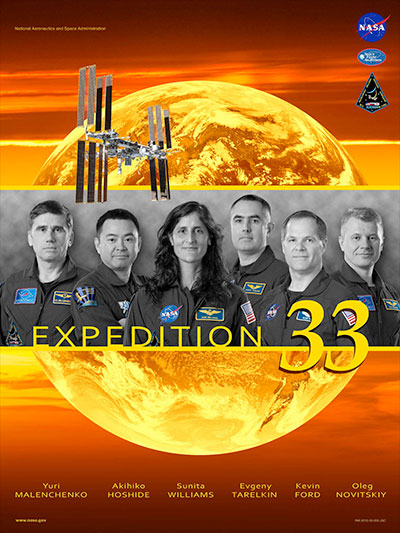
These CubeSats are “1U” size – 10 x 10 x 10 cm cubes – and deployed from a device mounted to the International Space Station. This deployment mechanism afforded Expedition 33 astronauts the ability to photograph the tiny spacecraft as they serenely drifted past the Station’s solar wings. Not many spacecraft builders ever get to see their work take flight!

A common scene in CubeSat concept art

CubeSats are awesome because they cost less than $100,000 to build and launch, which means that they can be playgrounds for new technologies. In an economic environment where it takes $30 or 60 or 80 million to put a satellite to orbit, and where businesses’ most intense priority is on increasing next-quarter earnings, very few private organizations are willing to gamble on new technologies or designs – even if those designs might improve the state of the art and give a company a huge advantage. But CubeSats are cheap. They fall within university research group budgets. They let technology developers take risks. They can be pathfinders for new ideas!

Space Carriers

Two space-fighter games recently came out in quick succession. Both are free, downloadable fan-made takes on popular franchises, and both show very high production values. The first is Wing Commander: Saga, based on the 1990s-era Wing Commander space simulator games.* The second is Diaspora: Shattered Armistice which lets you hop in the cockpit of your favorite fighter from Battlestar Galactica, accelerate out a launch tube, shoot up some Cylon raiders while flying sideways, and then burn in for a combat landing.** There’s also a recent article on the Foreign Policy web site about carriers in space. So now I’m thinking about that favorite military sci-fi trope: the space carrier!

Whether it makes sense, from a military, technical, or economic point of view, to build a carrier vessel to launch smaller fighting craft is a complex argument. (The FP article discusses more of this than I will here.) The major reasons to do so would be the same reasons why we build naval aircraft carriers now: the ship provides a base of operations for the aircraft, and allows them to participate missions that they could not perform on their own. That’s the sort of argument that even a far-flung space military would go for – if backed up with plenty of supporting evidence – but whether their space carriers launch single-seat fighters, small-crew attack ships, or robotic drones is up for grabs. I think that we can’t completelyanswer that question without knowing more about the reasons for this space military’s existence and the socioeconomic conditions during the Space War!

Let’s just suppose that it makes sense to have some kind of mother ship carrying some kind of smaller craft in a space military. I’m going to take a couple examples of carriers from military science fiction and grade them on what they do well and what they don’t. My examples are going to illustrate some common types of space carriers in media: space carriers from Star Wars, space carriers from the 2004-2010 TV series Battlestar Galactica, and space carriers from from the “Wing Commander” games.

Continue reading Space Carriers

The Universe is Awesome, Again

Now here’s some fodder for science fiction right out of today’s space headlines…

Kepler Discovers Planetary System Orbiting Two Suns

Sweet building blocks of life found around young star

Picture this: a multiple-planet, multiple-star system, still in its early stages of formation – gravity pulling proto-planets and gas streamers all over the system – the radiation from the igniting stars bathing the inner disk in energy – resonances between planetoids, dust lumps, and the stars feeding back into the dynamics – and life evolves.

The universe is just awesome.

They’ve Still Got It

I pulled my car into my lot today, and as I walked over to the mailbox, I passed three young kids from the apartment complex. One of them asks me, “do you work for NASA?!

(There’s a NASA meatball sticker on my car bumper.)

“I used to,” I told them.

“Wow! What did you do when you worked for NASA?”

“You know the new Moon rover?” I reply. “It has six legs with wheels on the ends, and a bubble on top for the astronauts to sit in.”

“Yeah!”

“I helped work on the suspension system for those wheels – so the rover can climb over big rocks while it drives.” My hands were crabbing their way over imaginary Moon boulders.

“That is so cool!

People in this country generally fall into two categories: those who love NASA, and those who think NASA needs to be even more ambitious and capable than it already is. In media, the phrase “NASA scientist” lends a researcher more weight than the simple moniker “scientist.” NASA means achievement, technical wizardry, and the impossible made possible. The entire organization is about the best and brightest coming together to make small steps into giant leaps.

NASA doesn’t fly people on its own spacecraft any more, and one of the greatest NASA heroes just departed the Earth for the last time. But the mere mention of the Space Agency still enthralls these kids in my parking lot. Let’s make sure that legacy continues.


Stoking our Curiosity for Other Worlds

In the wee hours of last Monday (Eastern US time), a jubilant Mission Control erupted at the successful landing of the Mars Science Laboratory “Curiosity.”

Curiosity has demonstrated some amazing technological feats. Now, that portion of its mission is nearly over, and the rover will go over to science operations. The hair-raising, fist-pumping, frenzy-whipping part is done – but it’s been great practice!

While the MSL entry, descent, and landing system may seem harebrained and silly, it is in fact quite conservative and driven by fundamental engineering decisions. The engineering triumph of this system demonstrates to me how spacecraft engineers can set extraordinarily technically ambitious goals and achieve them in dramatic fashion. The JPL engineers who devised it are the types of people who design a device to last for three months and find it still happily ticking away six or eight or more years later. This thing was going to work. The toughest part was probably selling the concept to the NASA brass!

So, now we’ve got reinforcing knowledge that we can aim for the stars and hit them (well, planets, anyway). Let’s set out with some crazy-ambitious goals! And let’s set out for some places that let us answer fundamental questions.

This is my core disagreement with the NASA Decadal Survey, which prioritizes a Martian sample return mission above all else: such a sample return will advance the sub-sub-field of Martian geochemistry an incremental amount. This is not an ambitious enough goal to meet our demonstrated engineering capability! I don’t want to discover evidence that some place may have been habitable sometime in the distant past – I want to go someplace where we discover life because it’s staring right back at us.

Not so long ago, I proposed a mission concept for a subsurface probe to Jupiter’s ice moon Europa. Europa is intriguing because we already know that it has liquid water, and we already know that it has a strong energy source from Jovian tides – both of which are key ingredients for life as we know it! Even better, there are certain surface features on Europa, which – if our best models for how those features form are correct – are conduits from outer space to the ocean beneath. I suggested that we might develop a space vehicle that conducts a high-wire act above one of these exposed ice fractures, dropping probes down into the ocean below.

Soft landing on a Europan double ridge

Continue reading Stoking our Curiosity for Other Worlds